You carefully pick a puree that looks wholesome. The front of the pack shows happy fruit and the word "natural". But turn it over and read the ingredients, and you may find something you didn't expect: sugar in one of its many disguises.
Sugar in baby food is one of the most overlooked topics in early nutrition. Babies have tiny tummies and a lot of growing to do, so every spoonful needs to count. In this guide, we explain what parents should know about sugar, how it hides on labels, and how to choose no added sugar baby food with confidence.
Babies don't need added sugar. At around six months, your baby is learning what food tastes like, and those early experiences help shape food preferences. Current guidance from bodies such as the WHO and national dietary guidelines advises avoiding added or free sugars in food for babies and toddlers, especially in the first two years.
Here is why it matters:
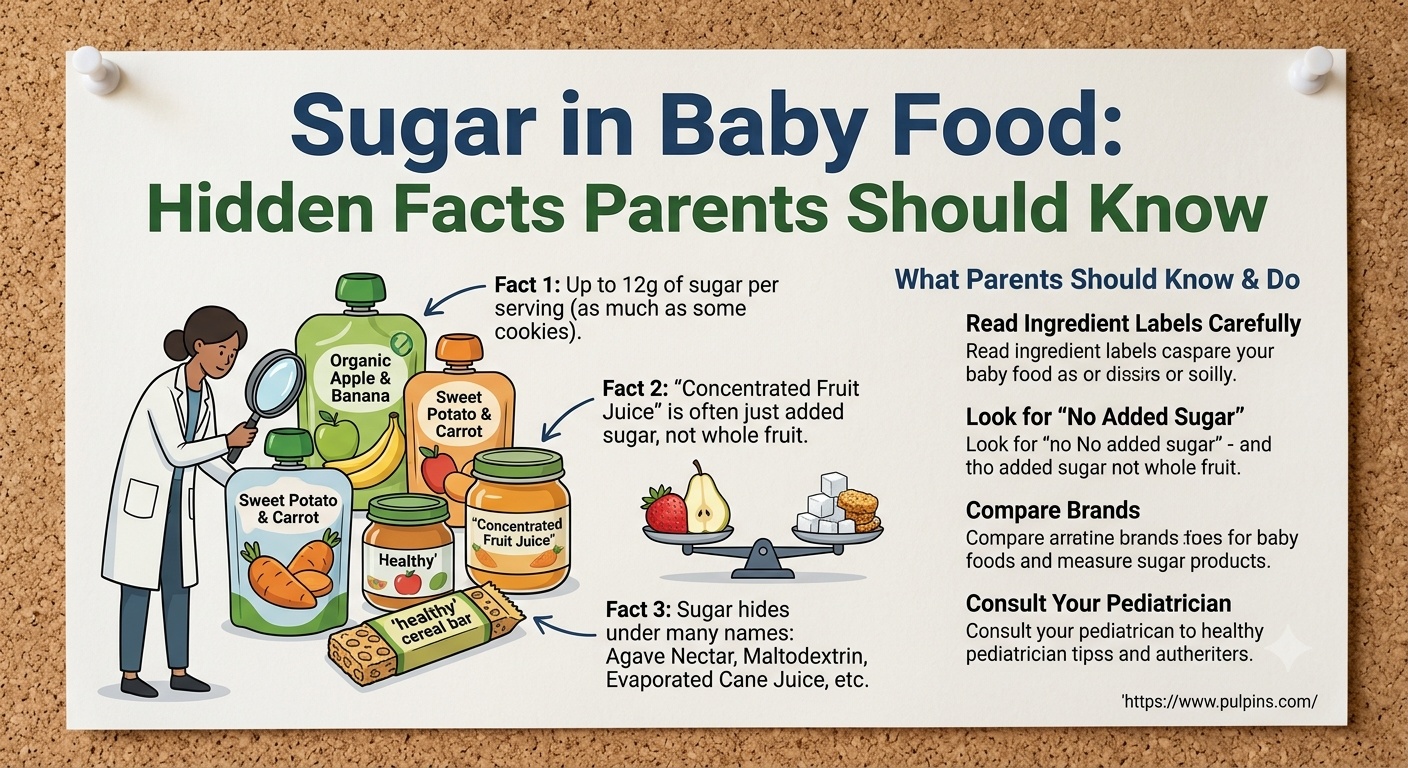
Sugar rarely appears simply as "sugar" on an ingredient list. Watch for these terms:
Some of these sound wholesome, but to a baby's body, added sweetness is still added sweetness. Honey is also unsafe for babies under 12 months because of the risk of infant botulism.
Words like "natural", "wholesome", "healthy", and "made with real fruit" are marketing terms. They don't tell you whether sugar has been added. Always check the ingredient list, not the front of the pack.
A good rule: if the ingredient list is short and reads like your kitchen (for example, "apple, banana, water"), that's a good sign. If it includes syrups, concentrates, or flavourings, look further.
Fruit naturally contains sugar, and that's fine. A puree made from whole fruit also brings fibre, vitamins, and minerals. This is quite different from refined sugar or syrup added to a recipe.
The nuance: concentrated sweeteners such as fruit juice concentrates are treated as "free sugars" in many guidelines, even though they come from fruit. So the best choice is a puree made from whole fruits and vegetables, with no sweeteners or concentrates added.
Even without added sugar, a pouch made mostly of fruit tastes very sweet. If a baby eats only sweet purees, they may start to prefer them.
How to balance it:
Sugar in a baby's diet doesn't come only from purees. Be mindful of:
Babies don't need extra sweetness to enjoy their food. Their palates are new, and simple flavours are exciting enough.
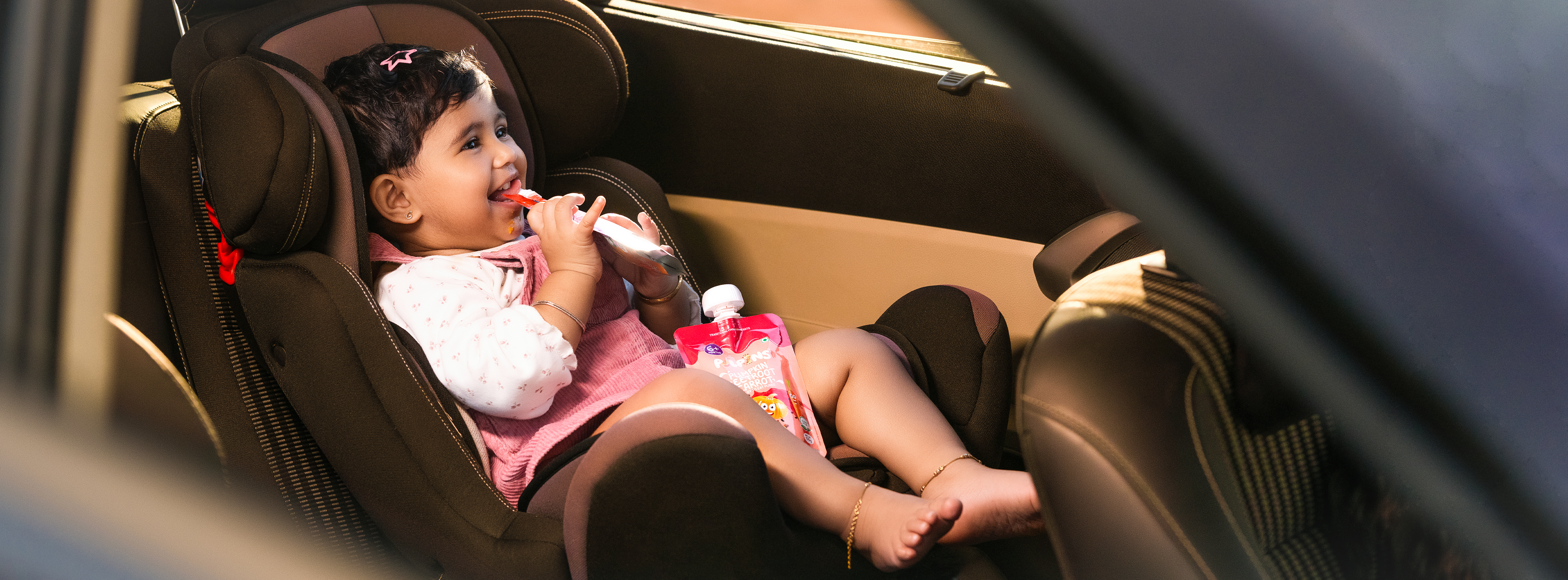
Baby food pouches are a convenient option, especially for travel, daycare, and busy days, but quality varies. When browsing baby food pouches online in India, look for:
For best practice, squeeze the puree onto a spoon instead of letting your baby suck directly from the pouch. This supports oral development and helps you monitor how much your baby eats.
Myth: Babies need sugar for energy.
Babies get energy from breast milk, formula, and nutrient-dense foods such as grains, lentils, fruits, and vegetables.
Myth: Jaggery or honey is healthier than sugar.
They may sound traditional or natural, but they are still added sweeteners. Honey is unsafe under 12 months.
Myth: Babies won't eat food without sweetness.
Babies are generally open to many flavours when offered repeatedly. It may take 10 or more exposures to accept a new food, so be patient.
Myth: All sugar-free labels are equal.
Always check the full ingredient list. Some "sugar-free" products use other sweeteners or concentrates.
Q1. Is sugar safe for babies under 1 year?
Health guidelines advise avoiding added sugars in the first two years of life. Natural sugars in whole fruits and milk are different from added sugars.
Q2. What is no added sugar baby food?
It means no sugar, syrup, honey, or concentrated sweetener has been added during preparation. The only sugars come naturally from the fruits or vegetables.
Q3. Are fruit purees high in sugar?
Fruit purees contain natural sugar, but they also provide fibre, vitamins, and minerals. Balance them with vegetable and grain purees for variety.
Q4. Can I give my baby ready-to-eat baby food every day?
Ready to eat baby purees can be part of a varied diet alongside breast milk or formula and home-cooked meals. Choose products with simple ingredients and rotate flavours.
Q5. How do I know if a baby food pouch is good quality?
Look for a short ingredient list, preservative-free and no added sugar claims, clear labelling, and age-appropriate stages. (Add Pulpins product link here.)
Reading labels takes a minute, but it can make a real difference to what your baby eats during these important first years. Choose simple, whole-ingredient foods, balance sweet and savoury flavours, and remember that your baby doesn't need added sugar to enjoy a meal.
When you need a quick, dependable option, look for ready to eat baby food that is preservative-free with no added sugar. Explore Pulpins' range of baby puree packs and find the right pouch for your little one's next meal