

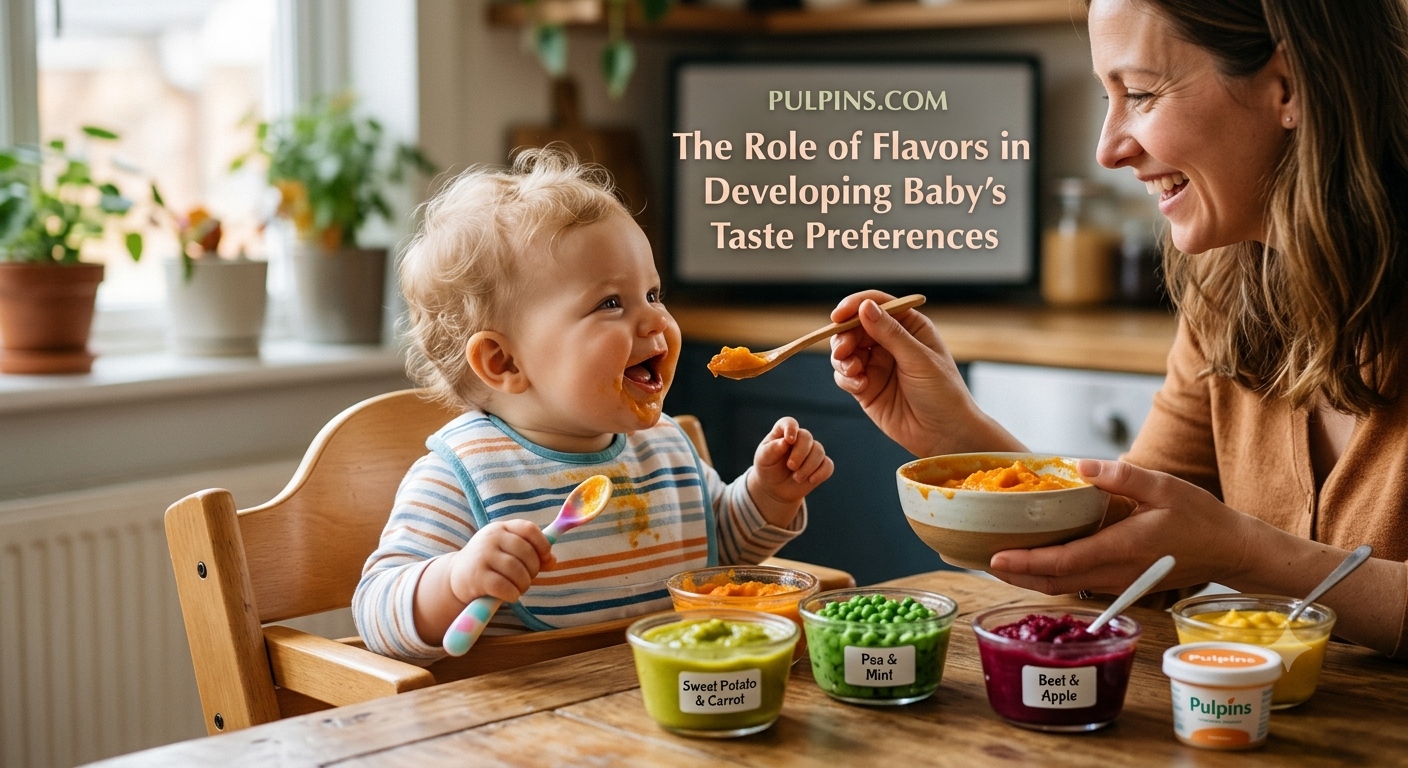
You spooned up a rainbow of carrots, peas and apples, and your baby still turned away with a scrunched-up face. Sound familiar? Every parent hits this moment, and it is easy to read it as "my baby is a picky eater." The truth is more hopeful: the first year of life is when taste preferences are most flexible, and the flavors your baby meets now can shape what they enjoy for years.
That is why the choices you make at weaning matter. Whether you are making your own or planning to buy baby food online, the variety on the spoon counts as much as the nutrition. High-quality baby food purees are one of the easiest ways to introduce a wide range of tastes safely and consistently. In this guide, we explain how taste develops, how to introduce flavors with confidence, and how to make mealtimes calmer.
Taste learning starts before your baby's first spoonful. Research suggests babies are exposed to flavors from the mother's diet through amniotic fluid in the womb and later through breast milk. Formula-fed babies experience a more consistent flavor, which makes the move to solids a bigger flavor adventure.
Humans are born with a natural liking for sweet and a wariness of bitter tastes. This is an evolutionary safety feature, not a sign of fussiness. The good news is that repeated, relaxed exposure can teach a baby to accept and even enjoy flavors they first rejected.
Most babies begin solids around six months, when they show signs of readiness such as sitting with support, good head control and interest in food. Many experts describe the period of roughly 6 to 12 months as a sensitive window when babies tend to be more accepting of new tastes and textures. After toddlerhood, many children become naturally more cautious about unfamiliar foods.
This is where baby weaning food purees are so useful. A smooth, single-ingredient puree lets your baby focus on one flavor at a time, so you can see what they enjoy and build from there.
Tip: Start with simple, single-ingredient purees, then move to blends once your baby has tried each ingredient on its own.
It is tempting to lean on sweet options because babies accept them easily. A balanced approach works better.
Studies on infant feeding suggest babies offered a variety of vegetables early tend to accept them more readily later. Try green options like spinach, peas and broccoli alongside sweeter carrots, pumpkin and sweet potato.
Mild herbs and spices such as cinnamon, cumin, coriander and a touch of ginger can add interest without salt or sugar. Parents who offer a wider flavor range often find their babies grow into more adventurous eaters.
Offering the same three purees every day limits exposure. Aim to introduce a new ingredient every few days, while allowing for any allergy checks your pediatrician recommends.
One of the most consistent findings in infant nutrition is that babies often need to try a food many times, sometimes 8 to 10 or more, before accepting it. Many parents give up after two or three attempts and assume their baby dislikes the food.
How to do it well:
Flavor is only part of the picture. How you feed matters too. Responsive feeding means watching your baby's hunger and fullness cues and letting them lead. Turning the head away, closing the mouth or pushing the spoon away are signs your baby is done.
Forcing or bribing can create negative associations with a food. A relaxed table, eating together as a family, and letting your baby see you enjoy a range of foods all help build healthy habits.
Tip: Sit at the same level, make eye contact and narrate the meal: "Mmm, this one is orange and sweet!" Babies learn by watching.
Busy days happen. Having ready to eat baby food on hand means a nutritious, varied meal is always available, whether you are traveling, back at work or simply tired. When choosing ready to eat baby purees or baby food pouches, look for:
A good range of healthy baby food lets you rotate flavors easily, which is the heart of flavor-led weaning. Pulpins offers a selection of ready to eat baby meals and purees designed to make this simple for busy parents. You can explore the range at pulpins.com.
Practical note: Always follow the age guidance on the pack, check the ingredient list for allergens, and avoid honey before age one. Speak to your pediatrician before introducing common allergens or if your baby has a family history of allergies.
Most babies are ready for solids around six months, once they show readiness signs. Begin with single-ingredient purees and add new flavors gradually. Always check with your pediatrician for personalized timing.
Research suggests babies may need 8 to 10 or more exposures before accepting a new flavor. Keep offering small tastes without pressure. A refusal today does not mean a permanent dislike.
Yes, when they contain real ingredients and offer varied flavors, including vegetables. Pouches are convenient, but it helps to also offer food on a spoon and to let your baby see and explore different textures.
No. Babies' kidneys are still developing, and added sugar or salt can shape preferences in unhelpful ways. Use mild herbs and spices for flavor instead.
Yes, as long as you choose a trusted brand with clear ingredient labels, age guidance and proper storage and delivery. Buying online also makes it easy to stock a variety of flavors for rotation.
Your baby's taste buds are learning every day, and the first year is a golden opportunity. Offer variety, stay patient through the "yuck" faces, repeat new foods calmly, and keep mealtimes joyful. Small, consistent steps now can lead to a confident, curious eater later.
Ready to start the flavor journey? Explore Pulpins' range of nutritious, ready to eat baby purees and pouches, and buy baby food online at Pulpins.com to bring variety to your baby's spoon, delivered to your door.