Standing in front of your laptop at 11 p.m., comparing ten tabs of baby food labels, you probably wonder what half those ingredients are. Starting solids is meant to be a joyful milestone. For many parents it turns into a research project.
More families now want preservative-free baby food: short ingredient lists, no added sugar or salt, and nothing a parent can't pronounce. Better food technology means that's no longer a trade-off against safety or convenience. This guide explains what "preservative-free" really means, how ready-to-eat meals stay safe without chemicals, and how to choose when you buy baby food online.
Preservative-free baby food contains no added chemical preservatives such as sorbates, benzoates, or sulphites. It is kept safe through the way it is cooked and packed, not through additives.
A truly clean label usually means:
The phrase "no artificial preservatives" can hide extra additives, so the full label matters more than the front of the pack.
Three shifts are driving this trend.
1. Parents read labels now. Search interest in healthy baby food has grown as parents compare brands, ingredients, and processing methods before buying.
2. Babies have small bodies and developing palates. Foods you offer in the first year shape early taste preferences. Naturally sweet, lightly flavoured purees help babies get used to the real taste of vegetables and fruit rather than the intensity of added sugar.
3. Technology has caught up. Not long ago, shelf-stable meant chemically preserved. Modern heat-and-pressure processing now delivers safe, long-lasting food without additives.
A fair note: preservatives permitted under food regulations are used within approved limits. The point of the preservative-free movement is not fear. Many parents simply prefer the simplest possible food for the first foods their baby eats.
This is the question parents ask most. If there are no preservatives, how does a pouch stay fresh on the shelf?
Retort processing seals food in its pouch and then cooks it under controlled heat and pressure. This destroys harmful microbes and makes the pouch shelf-stable without refrigeration until opened. Brands like Pulpins use this approach for their ready to eat baby meals, so freshness and safety come from the process rather than from added chemicals.
Look for:
Preservative-free food should be treated like fresh food once opened. Refrigerate immediately and use within the time on the label (Pulpins recommends within 24 hours). Don't freeze pouches unless the manufacturer says it's fine, as this can affect texture and packaging.
Pediatric guidance, including the WHO's, recommends exclusive breastfeeding or formula until about six months, with complementary foods starting after that. Always check with your pediatrician if your baby was born early or has health concerns.
Baby weaning food purees give a smooth, consistent texture while babies learn to swallow solids. They pair well with iron-rich foods, which matter from around six months, when a baby's natural iron stores begin to run low. A little lemon juice (a natural source of vitamin C) is used in some recipes to support iron absorption.
When you buy baby food online, you can't pick up the pack, so the product page has to do the work. Use this checklist.
In India, additives often appear as INS or E numbers. If you see one, look it up. Phrases like "natural flavour" or "nature identical" deserve a closer look.
Check that the product states the age (for example, 6+ months), the pouch material (BPA-free), and storage instructions.
Parents sometimes feel guilty about packaged food. It doesn't have to be a choice between homemade and convenient.
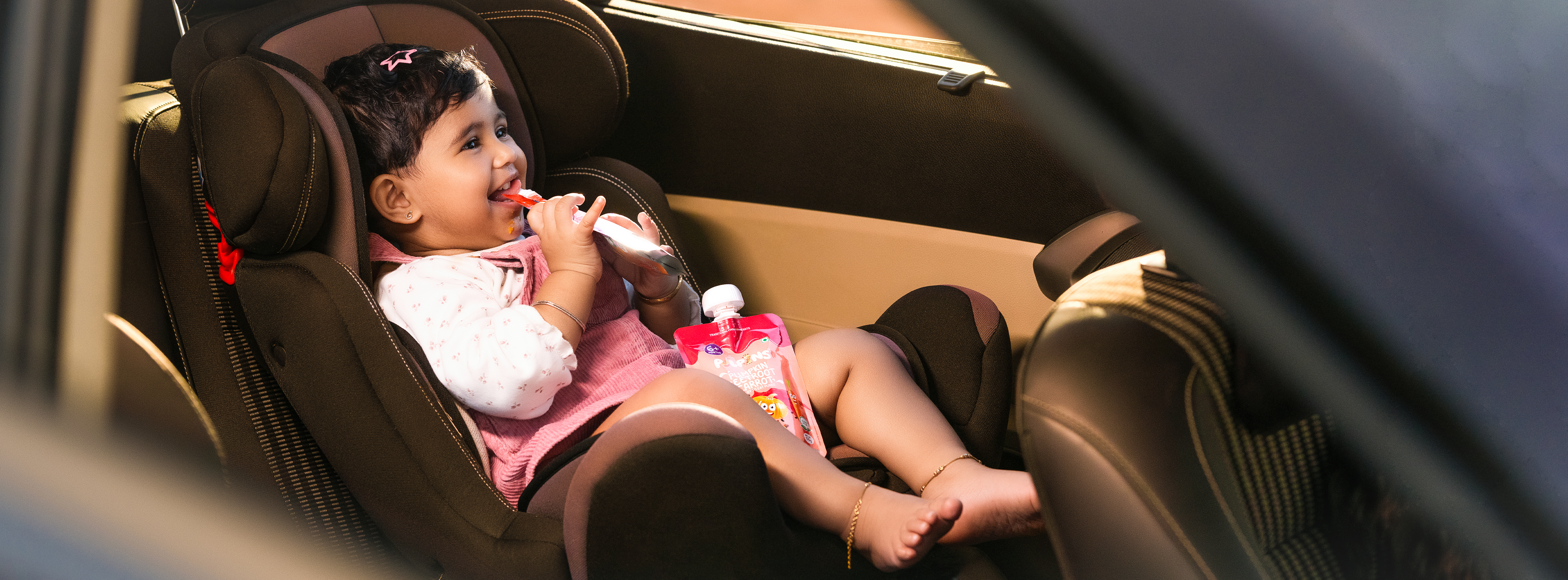
Homemade purees are wonderful, but they take time, need careful storage, and aren't easy to carry on a flight or a long drive. A good pouch is healthy baby food you can serve straight from the pack. It is mess-free, needs no refrigeration before opening, and is easy to use on busy mornings, in the car, or at a relative's house.
The best approach for most families is a mix: homemade when you have time, and quality ready-to-eat pouches on the days you don't.
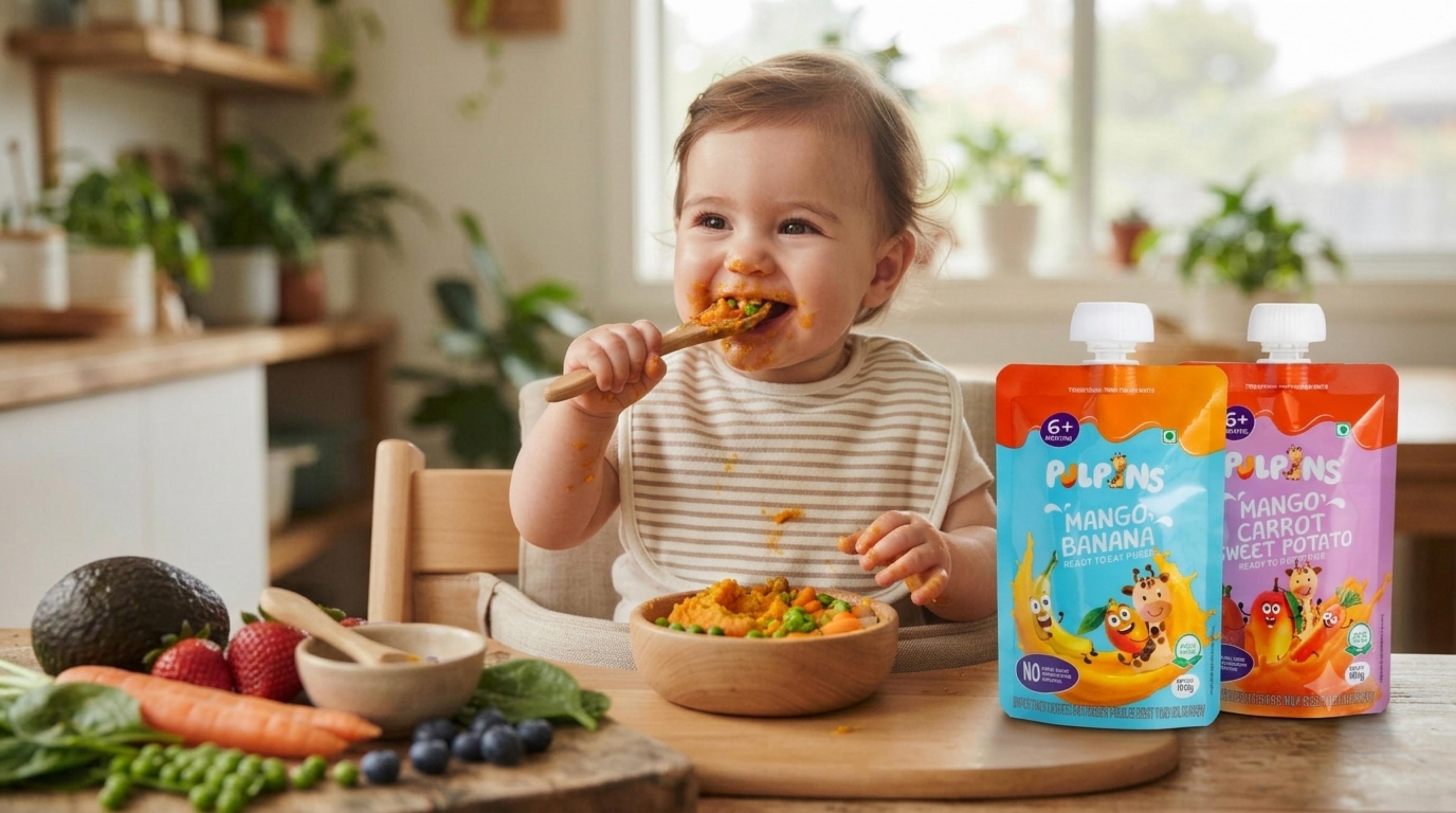
Pulpins makes ready-to-feed fruit and vegetable purees for babies 6+ months, with 100% real fruits and vegetables, no added sugar or salt, and no preservatives, colours, or additives. They are made in small batches and packed in BPA-free pouches with an anti-choke safety cap. The range includes fruit purees, veggie purees, and combo packs, with flavours such as Mango-Banana and Pumpkin-Beetroot-Carrot. You can browse the full range of baby food products online in the Pulpins store.
Yes, when it is processed and packed correctly. Methods like retort heat processing make food safe and shelf-stable without chemical preservatives, as long as the pouch is sealed and stored as directed.
Most babies are ready around 6 months, when they can sit with support and show interest in food. Until then, breastmilk or formula should remain the main source of nutrition. Your pediatrician can confirm the right timing for your baby.
Read the full ingredient list and look for additive codes such as INS or E numbers. Be cautious with vague terms like "natural flavour." A truly clean-label puree lists only fruits and vegetables.
Once opened, store the pouch in the refrigerator and use it within the time on the label. For Pulpins, that is within 24 hours. Don't leave opened food out at room temperature.
Yes, if you buy from a brand that lists complete ingredients, age suitability, storage instructions, and clear shipping and return policies. Starting with a trial pack is a low-risk way to try a new brand.
Babies grow fast, and the food they eat in the first year is a small but meaningful part of that. Preservative-free baby food reflects what parents have wanted all along: real ingredients, honest labels, and safety you can trust. With modern processing, it no longer asks you to give up convenience.
Ready to try it? Explore Pulpins' ready-to-eat baby food purees and start with a trial combo pack to find your baby's favourite flavour. Your little one's first tastes deserve to be simple, safe, and delicious.