

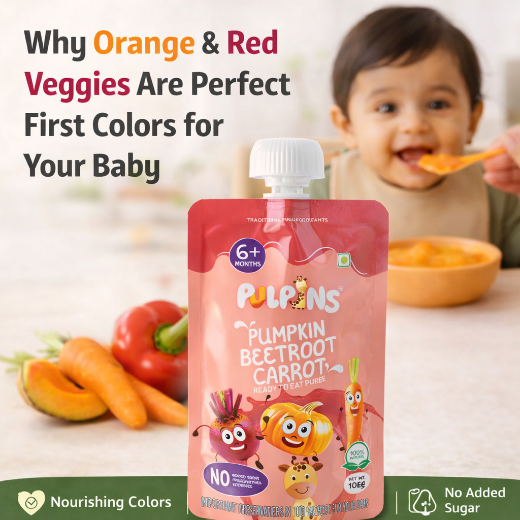
Bright orange and red vegetables are packed with essential nutrients that support your baby’s early growth, immunity, and vision—making them ideal first foods.
When introducing solids to your baby, every spoonful matters. The first foods you choose help shape not only their nutrition but also their taste preferences for years to come. Among the many options available, orange and red vegetables stand out as some of the best choices for early feeding.
These vibrant vegetables are naturally rich in beta-carotene, a nutrient the body converts into vitamin A. Vitamin A plays a critical role in your baby’s development—supporting healthy vision, immune function, and skin health.
Common beginner-friendly options include carrots, sweet potatoes, pumpkin, and red bell peppers. Their natural sweetness also makes them more appealing to babies who are just getting used to new flavors.
At around six months, your baby’s digestive system is still developing. Orange and red vegetables are generally easy to digest when cooked and pureed properly. Their smooth texture makes them ideal for transitioning from milk to solids.
One of the biggest concerns for parents today is avoiding unnecessary sugar in early diets. These vegetables offer a naturally mild sweetness, reducing the need for added sugars while still being enjoyable for your baby.
This makes them a great base for sugar-free baby food pouches or homemade purees.
Unlike many processed options, whole vegetables provide a combination of vitamins, minerals, and fiber. Key benefits include:
Choosing preservative-free baby food ensures your baby gets these nutrients without unwanted additives.
Early exposure to vegetables helps babies develop a preference for wholesome foods. Starting with naturally flavorful options like carrot or pumpkin puree can make it easier to introduce other vegetables later.
Babies who are introduced to a variety of vegetables early are more likely to accept diverse foods as they grow.
For busy parents, preparing fresh purees daily isn’t always practical. That’s where ready-to-eat baby food options can help—especially when they are:
High-quality baby puree packs can offer both nutrition and convenience when chosen carefully.
Not all packaged baby foods are created equal. When choosing products, check for:
These factors ensure your baby receives safe, balanced nutrition even when you’re on the go.
Starting your baby’s food journey with orange and red vegetables is a simple yet powerful choice. Their natural nutrition, gentle taste, and easy digestibility make them ideal for those first bites.
At Pulpins, we believe that a baby’s first foods should be as pure and nourishing as homemade. That’s why our thoughtfully crafted baby food purees are made with clean ingredients, no added sugar, and no preservatives—just real goodness your little one deserves.
Whether you’re at home or on the go, choosing safe, balanced, and ready-to-eat options can make early feeding both joyful and stress-free—for you and your baby.